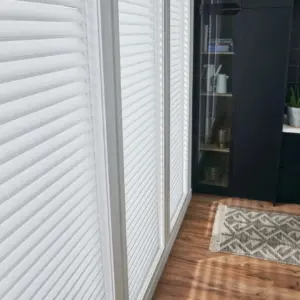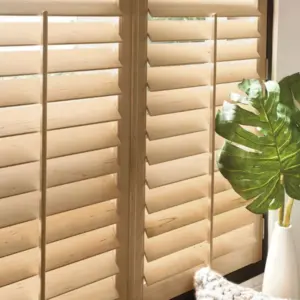

Shopping for shades usually starts with more questions than answers. Roller, honeycomb, roman, zebra, sheer, natural: each looks different and does a different job at the window. This guide lays out how to compare window shades by function first, then style, so the decision gets simpler instead of more overwhelming.
Start With What the Window Needs to Do
Every shade type controls light and privacy differently. Before comparing looks, it helps to know which of these matters most for the room in question: insulation, full blackout, softened light, or a specific decorative look.
Shade Type Comparison
| Shade Type | Best Known For | Light Control |
|---|---|---|
| Roller Shades | Clean, minimal, easy to clean | Light-filtering to blackout, depending on fabric |
| Honeycomb Shades | Insulation and energy efficiency | Light-filtering to blackout, depending on fabric |
| Roman Shades | Tailored, fabric-forward style | Light-filtering, blackout with lining |
| Zebra Shades | Switching between light and privacy modes | Adjustable between sheer and near-opaque |
| Sheer Shades | Soft, diffused light with adjustable vanes | Light-filtering, moderate privacy when closed |
| Natural Shades | Organic texture and warmth | Light-filtering, blackout available with a liner |
If Energy Efficiency Is the Priority
Honeycomb shades are built specifically for insulation, with a cell structure that traps air between the glass and the room. In an Idaho climate with hot summers and cold winters, that trapped-air design helps buffer temperature swings at the window better than a flat shade.
If Full Blackout Is the Priority
Roller, honeycomb, and roman shades are all available in blackout fabric or lining options. The choice between them at that point comes down to look rather than performance, since all three can achieve a similar level of light blockage.
If You Want Flexibility Between Light and Privacy
Zebra shades are built specifically for this. A single adjustment shifts the shade between a sheer, light-filtering position and a more solid, private one, which suits rooms with changing needs throughout the day, like home offices.
If Style and Texture Matter Most
Roman shades bring fabric pattern and structure into a room. Natural shades bring organic texture from woven materials like bamboo and reeds. Sheer shades bring a soft, diffused quality to the light itself. All three lean toward design impact over pure function.
Layering Shades With Other Window Coverings
Shades don’t have to work alone. Pairing a shade with drapery adds both a decorative frame and an additional layer of insulation or light control, which is worth considering in bedrooms or living rooms where both function and style matter.
Comparing Samples in Person
Fabric weight, texture, and how light passes through a shade are difficult to judge from a product photo. Valley View Blinds brings physical samples of every shade type to your home for a free in-home consultation, so you can compare them side by side in your actual room.
Every shade installation is professionally measured, installed by the Valley View Blinds team, and backed by a nontransferable lifetime warranty. Browse the full product lineup to start comparing.
Frequently Asked Questions
Honeycomb shades are specifically designed with an insulating cell structure, making them the strongest choice among shade types for buffering temperature swings at the window.
Roller, honeycomb, and roman shades are all available in blackout fabric or lining options, so the choice between them often comes down to style rather than light-blocking performance.
Roller shades are generally the simplest to keep clean since the fabric stays flat and wipes down easily, compared to shade types with folds or woven texture.
Get a Side-by-Side Comparison
Call Valley View Blinds at (208) 908-7468 or visit the contact page to compare shade samples in your own home.