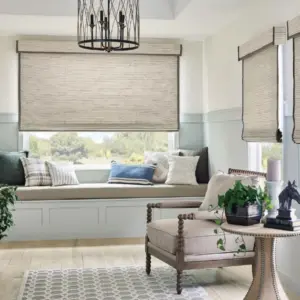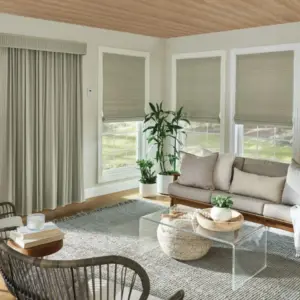

The living room usually has the biggest windows in the house, the most foot traffic, and the widest range of uses in a single day. It needs to be bright for a Saturday morning and private once the lights come on at night. That’s exactly the kind of room where the best shutters for living room windows earn their keep.
Start With How the Room Is Used
Before picking a louver size or finish, think through what actually happens in the room. A living room that faces the street needs more privacy control after dark. A living room with a west-facing window deals with harsh afternoon glare. A living room used for movie nights needs shutters that can close down light almost completely. Plantation shutters handle all three because the louvers tilt to any angle, not just open or closed.
Louver Size Matters More Than People Expect
Wider louvers let in more light and give a more open, modern view when the shutters are open, which works well on larger living room windows. Narrower louvers give a more traditional look and finer control over light in smaller windows. During a Valley View Blinds in-home consultation, you can hold different louver sizes up to your actual window and see how the proportions read in your space before deciding.
Frame Style and Finish
The frame is what makes a shutter look built-in rather than added on. A well-fitted frame closes the gap between the shutter panel and the wall, trim, or window casing, which matters most in living rooms where the window is often the focal point of the room. Finish options let the shutters either match existing trim for a seamless look or contrast with it for a more defined architectural statement.
Comparing Shutter Panel Configurations
| Configuration | Best For |
|---|---|
| Full-height panels | Standard living room windows with consistent light needs top to bottom |
| Split-tier (café style) | Windows where you want privacy on the lower half and light up top |
| Bi-fold panels | Wider windows or sliding glass doors leading to a patio |
Why Plantation Shutters Work So Well in Living Rooms
- Louvers adjust to control glare on a bright screen or television
- Solid panels hold up to years of daily opening and closing
- A classic look that doesn’t date the way patterned fabric can
- Easier to keep clean than fabric shades in a high-traffic room
Getting the Fit Right
Large living room windows are unforgiving of measurement mistakes. A shutter that’s even a little off can leave visible gaps or bind when opening. Valley View Blinds measures every window by hand and installs with its own team, backed by a nontransferable lifetime warranty, so the fit in a wide living room window is treated with the same care as a small hallway window.
Seeing Samples in Your Own Light
Living room light changes throughout the day more than in almost any other room. A shutter finish that looks great under a showroom light can look different under your living room’s morning sun or evening lamps. That’s why Valley View Blinds brings physical samples to your home for a free in-home consultation instead of asking you to decide from a photo or a showroom display.
To see the full range of louver sizes and finishes, visit the plantation shutters page, or compare shutters against other options on the main products page.
Frequently Asked Questions
Wider louvers generally suit larger windows because they let in more light and create a more open view, but the right choice depends on your window’s proportions, which a Valley View Blinds consultation can help you decide.
Yes, plantation shutter louvers close fully to significantly reduce incoming light, which works well for rooms used for movies or afternoon naps.
Bi-fold panel configurations are commonly used on wider openings like sliding glass doors, and Valley View Blinds can recommend the right configuration during your in-home consultation.
Ready to Choose the Right Shutters?
Call Valley View Blinds at (208) 908-7468 or visit the contact page to schedule a free in-home consultation and see shutter samples in your own living room.